In an industry driven by reputation and clout, awards have become a powerful, if sometimes debated, measure of success in the interior design industry. Beyond the glamour of ceremonies and the allure of a trophy (or a badge on your website), they offer something more enduring. Awards programmes can be platforms for visibility and markers of credibility or alignment with top organisers or magazines. For many designers, entering awards is not simply about winning, but about achieving a level of positioning in the wider professional conversation alongside admired peers.
This week, we hear from three professionals in the interior design sector with experience of the interior design awards cycle, Georgina Fraser, Managing Director of Jeffreys Interiors, Martin Waller, founder of Andrew Martin and of the Andrew Martin Interior Designer of the Year Award, and Jackie Armour, founder of Florida-based studio, JMA Interior Design. Each has a unique take and some great advice for any interior designers looking to submit their first citation.
Founder of Andrew Martin
Martin Waller
In 1996, Martin Waller founded the Andrew Martin Interior Designer of the Year Award, the prestigious annual programme that sees one designer crowned the winner, and 99 others recognised in a corresponding annual publication, the Andrew Martin Interior Design Review. When Waller isn’t advising clients, designing hotels and film sets, or sourcing unique pieces from across the world, he’s busy compiling this tome and choosing a winner, usually alongside a celebrity judge. In the past, this has included Stanley Tucci, Ronnie Wood, Twiggy, Jo Malone, Tim Rice, Richard E. Grant, Anya Hindmarch, and many more. Renowned winners include Axel Vervoordt, Kelly Hoppen, Martyn Lawrence Bullard, and Nicky Haslam.
“What makes the Andrew Martin Interior Design Award so special is its unwavering commitment to genuine design excellence,” Waller says. “As the first award of its kind to celebrate interior design on an international scale, it has raised the discipline to the same level of seriousness, visibility, and cultural significance traditionally reserved for architecture, art, and fashion.”
For Waller, the value in the Award for interior designers is that it offers an unbiased view of the best designers at the top of their game today by an independent but deeply ingrained design institution. “At its core, the Award honours outstanding work by offering independent recognition, a global platform, and meaningful validation to designers whose creativity, craftsmanship, and unique perspectives deserve to be seen,” he says. “Being selected goes beyond receiving an accolade; it is about joining an international roll call of designers who have shaped and transformed the world of interiors.”
Georgina Fraser
“In an increasingly competitive design landscape, awards programmes offer far more than a trophy for the shelf,” says Fraser. “The value of awards lies in the opportunity to pause, reflect and articulate the thinking behind our work, the kind of reflection that can easily be lost in the pace of day‑to‑day delivery.”
For Fraser, awards are the cherries on top of the projects she has invested in over time. “We’ve never designed with awards in mind,” she says, adding that “our focus is always on creating considered, characterful spaces for our clients.” Despite this approach, Jeffreys Interiors has been the recipient of a number of awards, and Fraser says that as a studio, “we feel genuinely privileged to have worked on so many showcase‑worthy properties over the years.”
Managing Director of Jeffreys Interiors
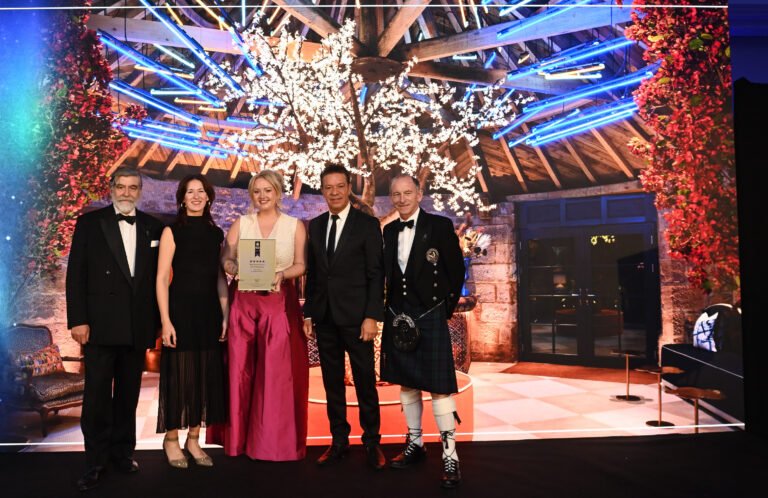
Jeffreys interiors has had recent successes at the British Institute of Interior Design Awards for the North & North West, and at the International Hotel Awards, where its work on the Temps Hotel at the Charlton Hall Estate won Best International Hotel and Best Hotel Interior Europe. “We were thrilled to win for the UK, and truly didn’t expect to go all the way and secure the global title,” says Fraser.
Of setting an awards strategy, Fraser suggests being as selective as possible. “Strong submissions take time, resources, and often a financial commitment,” she says, “so choose awards with rigorous and fair judging processes. The kudos will feel more deserved.”
Founder of JMA Interior Design
Jackie Armour
“Looking back, one thing we truly wish we had done differently was being more intentional about documenting and sharing our work from the very beginning,” says Jackie Armour, noting professional photography and broader visibility in the media and awards programmes. “In the early stages of building a design practice, it’s easy to become completely consumed by the projects themselves managing clients, overseeing installations, and focusing on the creative process while unintentionally overlooking the importance of branding, marketing, and visibility.”
For Armour, it is the studio’s Color Cachet project that broke through. It earned national recognition with a LUXE RED Award, a prize that honours outstanding residential design. The win made it one of the studio’s most celebrated projects. “At a time when many interiors leaned neutral, the project celebrated a more fearless, maximalist aesthetic that still feels fresh years later,” she says.
Anya Cooklin-Lofting
Anya Cooklin-Lofting is a freelance journalist specialising in design, culture, and the arts.