For over a decade, Instagram has been the go-to digital shopfront for interior designers, offering the most visual and engaging stage to share projects, studio news, and more. But as the platform has changed and matured with the introduction of new tools and algorithms, user behaviour has shifted, too. The question of whether Instagram is worth the hours of investment, from content creation to community management, is more poignant than ever. So, this week we spoke to designers who have ridden the wave of the platform, and marketing consultants who has made it work for countless brands in the luxury space.

Stephanie Foxley, Digital and Marketing Consultant
For Stephanie Foxley, Instagram should be seen as a powerful but limited tool within a wider marketing portfolio. “Instagram can be a great platform for interior designers, but it’s important not to rely on it as your only marketing channel,” she says. “You don’t own your audience on Instagram, nor any data that could be useful for further marketing activity. Unfortunately, Meta holds all this information, and while it provides excellent advertising and analytics tools, it can feel risky and vulnerable to build your entire marketing strategy on a platform you can’t control.” Instead, Foxley advises her clients to prioritise email marketing, cultivating their own databases where they actually own the audience and the data.
“Instagram is best used to feed that pipeline,” she says, “whether through organic posting or targeted ads.” From a marketing perspective, it plays a “top of funnel role,” building awareness, attracting attention, and driving enquiries. “Instagram is often the first touchpoint for new clients, a way for them to discover your brand and make initial content,” says Foxley. But, she always advises clients that the work doesn’t stop there. “Nurturing the leads generated by Instagram, particularly for higher-value services, requires personal interaction.” Even as a top advocate for digital marketing investment in the luxury sector, Foxley knows that “there is no substitute for human connection when it comes to building trust around large investments.”
Grant Pierrus, Marketing and Design Consultant
Grant Pierrus is an established design blogger as well as a marketing consultant. For him, Instagram is vital, but serves more as a reputational platform than a lead machine. “Instagram plays a significant role in my business,” he says, “but I would characterise it more as a branding tool rather than a direct client lead generator. While I do receive the occasional enquiry via DM, Instagram is primarily an avenue for showcasing work, sharing insights, and positioning myself within the broader design conversation.”
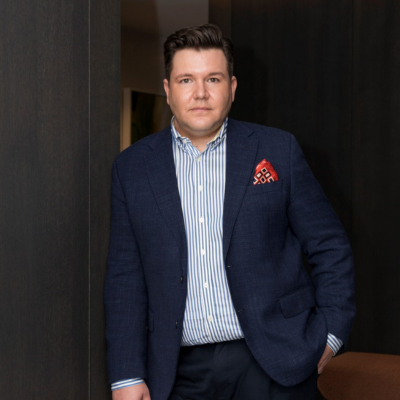
Pierrus believes that Instagram should not be viewed as a replacement for more traditional business development strategies. “In my experience, Instagram isn't a direct replacement for traditional business development channels. Still, it definitely builds awareness, which in turn drives more organic client interest and deeper engagement with my website.”
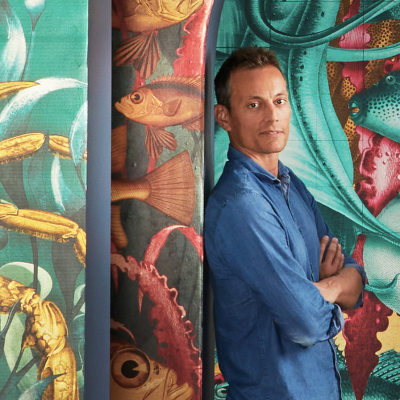
Adam Ellis, Founder of Adam Ellis Studio
Adam Ellis, founder of Adam Ellis Studio, the London-based fine art and wallpaper design practice, takes a rather different view. He credits Instagram with directly driving business, and that he uses Instagram as a “dynamic showcase of our work, from recently completed projects and new design launches to upcoming events and collaborations.” For Ellis, the platform is an immediate way of sharing “our evolving aesthetic with a global audience.”
The Studio welcomes the use of Instagram as a strong enquiry generator, and has reported that most enquiries arrive via direct message, often in response to a specific post. For Ellis, it’s a gratifying thing when clients reference particular wallcoverings or artworks they have seen, and he reads into this a direct interest, from Instagram, into the niche his studio fills.
“Instagram is first and foremost a curated visual portfolio and brand statement,” says Ellis, adding that it “naturally attracts new leads as a by-product of telling our story well.” High-profile collaborations also help, and for Ellis, set a bar to which new clients and brand new audiences, might aspire. “Our audience responds warmly to public work for brands, but the greatest impact of doing partnerships is the opportunity to reach new ones.” For Ellis, who is designing the LAPADA Berkeley Square Fair marquee this year, “these partnerships not only elevate our brand presence but also open the door to clients who might not otherwise have discovered us.
Jordan Cluroe and Russel Whitehead, 2LG Studio
After more than a decade on Instagram, Jordan Cluroe and Russel Whitehead, the founders of 2LG Studio, see Instagram as a cog in a much bigger machine. “Our working relationship with the platform has changed over the 11 years that we’ve had our business account,” Cluroe says. “It has had several transformations and, in our experience, you’ve got to stay reactive and ready for change. It’s a constantly shifting platform.”
“Instagram has performed for us as a tool for inspiration-gathering, a shopfront, a press page, and everything in between,” says Whitehead. “I think brands need to have a much more holistic approach to social media, supporting an updated website with a blog or journal, Facebook for advertisements, TikTok and for us, even YouTube.”
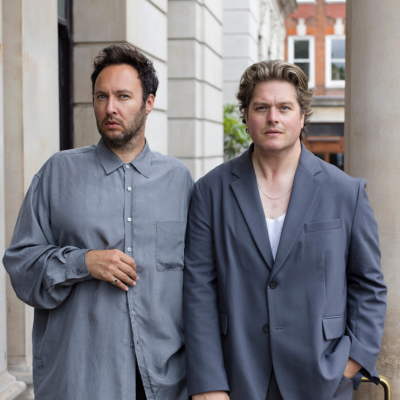
2LG Studio
In terms of lead generation, while Instagram drives traffic to the 2LG Studio website, it doesn’t always bring in direct leads. “I think early on, Instagram was a better direct lead generator,” says Cluroe, adding that now, “it’s a much more sophisticated platform, and now it functions best as a keyhole into the whole 2LG Studio world.” Behind-the-scenes content performs well for the pair, as well as product collaboration content, installations, and previews of projects. “This helps new clients gain insight into everything that we do,” says Whitehead, “driving traffic to our website, where most of our enquiries come from.”
Anya Cooklin-Lofting
Anya Cooklin-Lofting is a freelance journalist specialising in design, culture, and the arts.